Featured
Application portfolio & capability intelligence

Application portfolio management
for evidence-based rationalization.

Iyene centralizes application and vendor records, connects them to business capabilities and dependencies, and supports AI-assisted analysis using the TIME framework.
Import application and vendor data
Map dependencies and capabilities
Maintain lifecycle and ownership context
Apply TIME rationalization
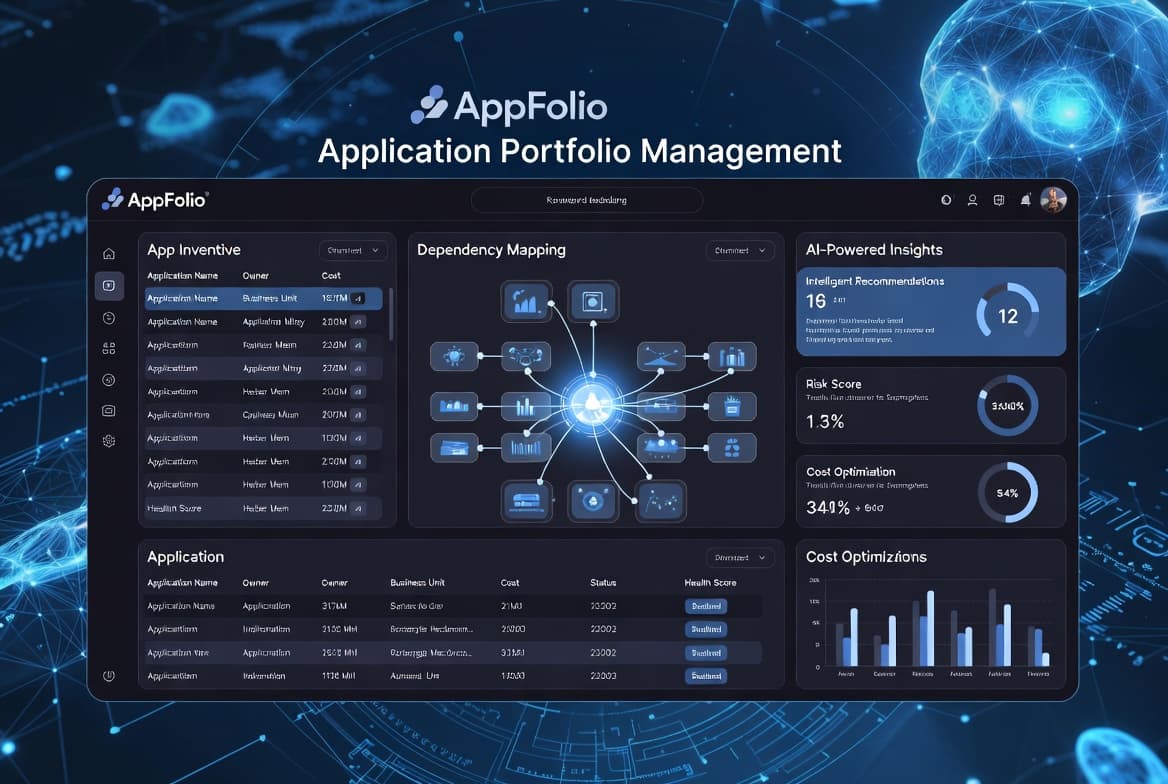
Iyene application portfolio management dashboard showing comprehensive app inventory, dependency mapping, and AI-powered insights
📊

Dashboard preview: application inventory, dependency mapping, cost context, and AI-assisted rationalization recommendations

How It Works

A practical APM workflow

Four connected steps grounded in the capabilities implemented in Iyene today

01
01

Catalog

Create application and vendor records or use spreadsheet import to bring existing portfolio data into one structured workspace.

02
02

Map

Connect applications to business capabilities, map dependencies, and visualize your entire technology landscape. See exactly which capabilities each app enables and identify gaps.

03
03

Assess

Maintain ownership, lifecycle, cost, technical-health, resilience, and vendor-risk context for portfolio review.

04
04

Rationalize

Use duplicate detection and AI-assisted TIME scoring to prepare rationalization recommendations for human review.

Portfolio data is updated when your team imports, creates, or edits records; Iyene does not claim automatic real-time discovery.

Comparison Guide

APM vs CMDB vs ALM vs ITAM

Understanding the differences and when to use each approach for managing your technology landscape

Primary Focus

The main purpose and strategic objective of each approach

APM (Iyene)
Application portfolio strategy & optimization
CMDB
IT asset configuration & relationships
ALM
Software development lifecycle
ITAM
IT asset inventory & license compliance

Scope

What each approach covers in the technology ecosystem

APM (Iyene)
Enterprise-wide application landscape
CMDB
IT infrastructure & configuration items
ALM
Development projects & releases
ITAM
Hardware, software, & license assets

Business Context

How each approach connects to business outcomes

APM (Iyene)
Links apps to business capabilities & value
CMDB
Technical dependencies & incidents
ALM
Development team productivity
ITAM
Asset costs & contract terms

Lifecycle Coverage

What stages of asset lifecycle are managed

APM (Iyene)
Full lifecycle: ideation to retirement
CMDB
Operational state & changes
ALM
Development & release phases
ITAM
Procurement to disposal

Use Case

Primary business problems each approach solves

APM (Iyene)
Rationalize portfolio, reduce costs, strategic planning
CMDB
Incident management, change control, service mapping
ALM
Release management, sprint planning, CI/CD
ITAM
License compliance, asset tracking, cost allocation

Key Differentiator

What makes each approach unique and valuable

APM (Iyene)
AI-powered insights & business capability mapping
CMDB
Real-time configuration tracking
ALM
Integration with dev tools & workflows
ITAM
Contract & license optimization

While CMDB, ALM, and ITAM solve specific operational needs, APM provides the strategic layer that connects applications to business value, enabling portfolio optimization and informed decision-making.

Learn more about APM vs CMDB in detail

Frequently asked questions about APM

Stop managing applications the way you have been

Build a structured application inventory, connect it to business capabilities, and use a named rationalization framework to support the next portfolio decision.

Application Portfolio Management with Iyene | AppFolio